
When Emerance Nyiramahirwe suddenly collapsed at school in 2019, she was rushed to the hospital where her condition rapidly deteriorated into a coma, leaving her unconscious for an entire day. Medical tests soon revealed dangerously high blood sugar levels, leading to a Type 1 Diabetes (T1D) diagnosis. Learning that she would live with a chronic condition from a young age was difficult. Her family was already caring for her father, who also lives with diabetes.
“It was a difficult journey, but I accepted it step by step,” she said. “Learning to give myself insulin injections was a real challenge. It was tough at first, but with education from the clinical team, it became second nature, and I accepted that I could live well with diabetes.”
Eric Munyaneza, who is also from Burera District, faced challenges similar to those Emerance experienced.
“I was diagnosed with T1D in 2020 when I was still young and in my first year of secondary school. Now, I have just completed the Senior Six National Exam,” he added. “I initially struggled to accept the fact that I had a chronic condition, but I have come to accept it, and now I am doing well.”
With continued follow-up and counseling from healthcare professionals at Butaro Level 2 Teaching Hospital with the support of Partners In Health/Inshuti Mu Buzima (PIH/IMB), Eric gradually learned to manage his condition. Support with self-care and medical management helped him regain confidence and return to his studies. He went on to complete his secondary school.
Their experiences reflect the challenges young people can face when diagnosed with Type 1 Diabetes. Beyond medical treatment, they need practical knowledge to manage their condition, emotional support to cope with the diagnosis, and encouragement from families and others who understand what they are going through.
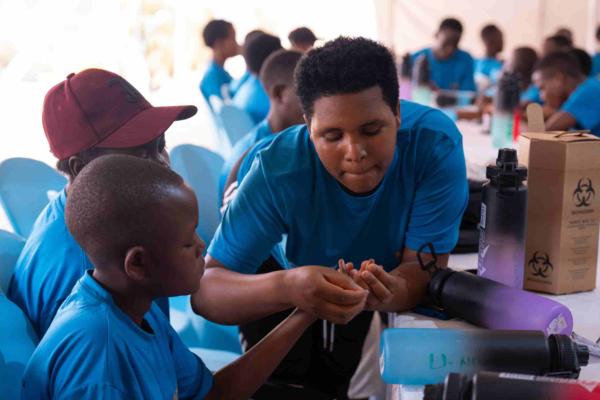
For Emerance and Eric, that support has come through opportunities to learn and connect with other people living with T1D through an eight-day patient and family camp of young people living with T1D who attended held from August 16 to August 24, 2026. The camp brought together 70 participants, including young patients aged 1 to 26, adults living with the condition who served as peer counselors, family members, and healthcare workers from Rwinkwavu, Butaro, and Kirehe hospitals.
Held under the theme “Thriving Together: Learning, Growing, and Living Well with Type 1 Diabetes,” the camp focused on strengthening diabetes self-management, addressing stigma, promoting psychosocial well-being, and engaging families in diabetes care.
For Eric, the camp was an opportunity to learn more about Type 1 Diabetes and gain practical skills to manage his condition with greater confidence.
“At the camp, I learned how to administer my own insulin, manage my blood sugar levels, and why avoiding alcohol is critical when living with T1D. Connecting with peers who share the same condition allowed me to learn from their experiences and better understand the importance of taking my medication properly. It was a truly valuable experience.”
For Emerance, the experience was transformative in several ways.
“At the camp, we covered essential topics like nutrition and insulin self-injection,” Emerance explained. “I gained practical knowledge on how to manage my blood sugar levels and handle sudden drops or spikes. Hearing personal experiences and testimonials from others was deeply valuable and will help me navigate similar challenges in the future. Plus, I made wonderful new friends.”
The camp’s curriculum covered 13 topics, including insulin administration and adherence, nutrition and carbohydrate counting, physical activity, blood glucose monitoring, emergency management, mental health and diabetes burnout, family support, peer support, reproductive and sexual health, and goal-setting.
Organized by Partners In Health (PIH), locally known as Inshuti Mu Buzima (IMB), in partnership with the Rwanda Biomedical Center (RBC) and other partners, the camp is part of broader efforts to strengthen diabetes care and Rwanda’s response to noncommunicable diseases.
Dr. Pacifique Hagenimana, Director of the Non-Communicable Disease Programme at PIH/IMB, said the camps help young people develop practical skills for insulin administration, glucose monitoring, nutrition, physical activity, and prevention of complications.
“The reason we put so much emphasis on Type 1 diabetes is that living with it requires insulin injections, and the condition can cause dangerously low blood sugar as well as high blood sugar,” Dr. Hagenimana explained. “That is why providing them with self-care knowledge, especially for young people, is so important. In addition, the camp is a place where they meet and learn that they are not the only ones living with the condition.”
Beyond the camp, PIH/IMB supports people living with T1D through a broader package of clinical and social support. This includes medication, transportation assistance, vocational training for youth, essential medical tools such as glucometers and lancets, and training healthcare workers across supported hospitals.
For young people like Emerance and Eric, such support is more than managing a diagnosis. It is about gaining the knowledge, confidence, and support they need to continue learning, growing, and living well with Type 1 Diabetes.
Beyond initiatives like this camp, PIH/IMB’s broader work to strengthen Rwanda’s Health System, particularly in managing non-communicable diseases (NCDs), covers clinical and social care. These include supporting clinical treatment, covering patients’ transportation costs, providing access to vocational training for youth with T1D, and supplying essential medical tools like lancets and glucometers, as well as building local healthcare capacity by training medical staff across PIH/IMB supported districts.