
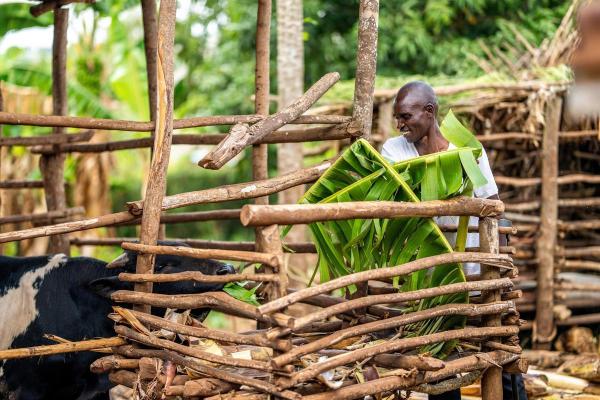
Jean Marie Vianney Ruzirabwoba, 50, who lives in Eastern Rwanda, starts his day by caring for and feeding his cow, an asset he and his wife purchased together from their savings. For years, physical labor was nearly impossible due to his medical condition, epilepsy, which took a severe toll on his body and left him needing a walking crutch.
He developed epilepsy in 2011. At first, acceptance was hard to come by; neighbors struggled to understand his condition, and he faced social stigma due to his frequent, severe seizures.
Ruzirabwoba explained that neither he nor his family understood the condition at first. His younger brother, who lives nearby, helped him seek help from traditional healers, spending over one million Rwandan francs without success. Subsequent efforts to seek healing through church prayers also proved unsuccessful.
After about three years of struggle, a neighbor approached him with a life-changing realization.“One girl who is our neighbor came to me and told me that my condition was like hers,” he said. “I denied it, but she explained that our symptoms are the same, and she told me, ‘Let me take you to the hospital so that they can give you medication.”
For nearly a year, the neighbor continued urging him to seek medical care.
“I was in bad shape because of falling and seizures; my mouth was broken, everything had fallen apart,” he shared. “My life felt lost; I was waiting only for death, and I was in despair. At home, they would ask me to come eat, and I didn’t want it. I only wanted to die; I had even thought of taking suicidal pills because, where I was, I could see it was closer to death.”
Jean Marie Vianney was desperate. He knew going to the hospital was his best option. He tried to persuade his wife and brother of this, explaining that they had already exhausted every alternative, and they were eventually convinced.
In 2015, he sought medical help at Ruramira Health Center, one of the facilities in rural areas, where Partners In Health/Inshuti Mu Buzima (PIH/IMB) supported the decentralization of mental health services. There, he was diagnosed with epilepsy, a neurological condition included in Rwanda’s mental health care framework and managed through services integrated into primary health care. After starting medication, his health improved significantly. Sticking to his treatment plan has transformed his life. He says he now recognizes warning signs before a seizure, allowing him to sit down safely. Physical symptoms, such as the white foam that once accompanied his seizures, have also markedly decreased.
He says he is now in the best shape.
“Now I say that I am very well, not like before when I looked like ashes, I was nobody,” he reflected. “Now I look good, now that I take my medication, I am better; I live with everyone… Now I am in a leadership position, and I am the representative of people with disabilities at the cell level.”
Through PIH/IMB, he also joined a local support group, where he connects with others living with epilepsy or other mental health challenges.
“I learned about Partners In Health because PIH is the one following up on our care,” he said. “In addition to that, they have founded a support group for us, in which there are 15 of us who suffer from mental health issues. We now have a savings scheme, where we contribute money each month, and we plan to start a business buying and retailing foodstuffs.”
In 2021, Jean Marie Vianney legally married his wife, formalizing their marriage after years together during his recovery journey. Together, they have purchased a plot of land and plan to construct their own permanent home.
Jean Marie Vianney’s journey reflects PIH/IMB’s commitment to strengthening and sustaining public health systems, particularly in rural areas, to improve access to care for underserved communities. He is among approximately 17,000 people who have accessed mental health services through 45 health centers and three PIH/IMB-supported district hospitals: Rwinkwavu, Kirehe, and Butaro. He is also one of approximately 3,000 mental health service users enrolled in PIH/IMB-supported self-help groups, which promote social connection, recovery, stigma reduction, economic empowerment, and active participation in community life.