Cancer Care

Partners In Health/Inshuti Mu Buzima (PIH/IMB), in partnership with Rwanda’s Ministry of Health, is helping build an equitable national cancer care system that ensures all people can access timely, high-quality cancer services regardless of where they live or their ability to pay.
Our Impact
Since the establishment of the Butaro Cancer Center of Excellence (BCCOE) in 2012, PIH/IMB has worked alongside the Government of Rwanda to transform cancer care through early detection, accurate diagnosis, specialized treatment, workforce development, research, digital innovation, patient support, and health system strengthening. Today, this work reaches far beyond a single hospital, contributing to a stronger national response to cancer across Rwanda.
-
 150,000+WOMEN SCREENED
for cervical cancer and breast cancer early detection.
-
 33,000+PATHOLOGY SAMPLES
processed every year, to support timely diagnosis.
-
 24,000+PATIENTS RECEIVED
comprehensive cancer treatment.
CANCER CARE IN RWANDA
Cancer is a growing public health challenge in Rwanda. According to data from the Rwanda National Cancer Registry, more than 46,000 cancer cases were registered between 2007 and 2023, with the number of diagnosed cases increasing substantially over time. Breast and cervical cancers are among the most common cancers affecting women, while prostate and stomach cancers represent a significant burden among men.
Effective cancer care requires far more than treatment alone. Patients need access to early detection, accurate diagnostic services, specialized healthcare professionals, affordable treatment, psychosocial support, and strong referral systems. Through its long-standing partnership with the Ministry of Health, PIH/IMB is helping strengthen each of these components while building a sustainable national cancer care system.
DELIVERING COMPREHENSIVE CANCER CARE
The Butaro Cancer Center of Excellence (BCCOE) serves as one of Rwanda’s national referral centers for cancer care. Patients from across the country receive comprehensive services including chemotherapy, supportive care, pathology services, radiotherapy referrals, follow-up care, and long-term survivorship support.
At BCCOE, multidisciplinary teams work together to ensure each patient receives individualized, high-quality care. The program’s patient-centered approach addresses both medical and non-medical barriers that affect treatment success and long-term outcomes.
STRENGTHENING PATHOLOGY AND DIAGNOSTIC SERVICES
Accurate diagnosis is the foundation of quality cancer care. When the Butaro Cancer Center of Excellence opened, Rwanda had only one pathologist and limited pathology infrastructure, forcing many specimens to be sent abroad and causing significant delays in diagnosis and treatment initiation.
In partnership with the Ministry of Health and international collaborators, PIH/IMB has helped expand pathology services through laboratory strengthening, specialist training, telepathology, and investments in modern diagnostic technologies. These efforts have improved diagnostic quality, increased the number of tests that can be performed locally, and reduced pathology turnaround times from several weeks to less than seven days. Today, the Butaro pathology laboratory serves patients from across the country and contributes to Rwanda’s growing diagnostic capacity.
PROMOTING EARLY DETECTION AND SCREENING
Many cancers can be treated more effectively when detected early. However, delayed diagnosis remains one of the greatest challenges facing cancer control efforts in Rwanda.
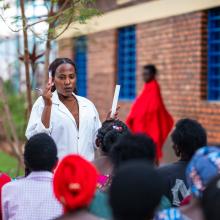
To improve early detection, PIH/IMB supports community awareness, screening, and referral services at multiple levels of the health system. Community Health Workers are trained to identify warning signs of cancer and support timely referrals. Nurses and clinicians receive training in breast cancer screening, clinical breast examination, cervical cancer screening using HPV DNA testing, and referral pathways for further investigation and treatment. Through these efforts, more patients are being diagnosed at earlier stages, when treatment is more effective and outcomes are more favorable.
PATIENT NAVIGATION AND PERSON-CENTERED SUPPORT
Navigating cancer care can be overwhelming for patients and families. Specialized treatment often requires multiple appointments, referrals, travel, and coordination across different healthcare facilities.
To address these challenges, PIH/IMB supports patient navigation services that help individuals move efficiently through the healthcare system. Patient navigators assist with care coordination, appointment tracking, referrals, treatment adherence, and follow-up support, helping reduce delays and ensuring that patients remain engaged in care throughout their cancer journey. This model has become a critical component of providing equitable cancer care in Rwanda.
DEVELOPING RWANDA’S ONCOLOGY WORKFORCE
A strong cancer care system depends on skilled healthcare professionals. As Rwanda’s national center for oncology training, BCCOE provides education, mentorship, and clinical training opportunities for physicians, nurses, laboratory professionals, residents, and students from across the country.
Working collaboratively with the University of Rwanda, the University of Global Health Equity, and leading international academic institutions, PIH/IMB supports hands-on learning and professional development that strengthens Rwanda’s oncology workforce. Trained healthcare workers return to facilities throughout the country equipped to expand access to quality cancer care within their communities.
EXPANDING PALLIATIVE AND SUPPORTIVE CARE
Cancer affects every aspect of a person’s life. In addition to medical treatment, patients and families often face significant physical, emotional, social, and economic challenges.
PIH/IMB supports comprehensive palliative and supportive care services that focus on symptom management, pain control, psychosocial support, family-centered care, and improved quality of life. By integrating palliative care into cancer services, patients receive compassionate care throughout every stage of illness. This approach ensures that care remains focused not only on treating disease but also on supporting the dignity and well-being of patients and families.
RESEARCH, DATA, AND INNOVATION
Research and innovation are essential to improving cancer outcomes and guiding evidence-based policy.
PIH/IMB collaborates with the Ministry of Health, academic institutions, and international partners to conduct implementation research, clinical studies, and health systems research that improve cancer care delivery. Program data contribute to the Rwanda National Cancer Registry and help inform national planning, policy development, and future investments in cancer prevention and treatment. Through these activities, Rwanda is increasingly contributing to global knowledge on equitable cancer care delivery in resource-limited settings.
DIGITAL HEALTH AND CANCER INFORMATION SYSTEMS
PIH/IMB has supported the development and implementation of digital systems that strengthen oncology care across Rwanda. Oncology workflows integrated into OpenMRS enable healthcare teams to track patient outcomes, improve continuity of care, support clinical decision-making, and generate data for quality improvement and research. These digital innovations help strengthen the health system while improving the patient experience.
SCALING AND DECENTRALIZING CANCER CARE
Although BCCOE remains a national referral center, access to cancer services should not depend on where a patient lives. PIH/IMB works alongside the Ministry of Health to strengthen cancer services across Rwanda through workforce development, clinical mentorship, referral systems, and health system strengthening initiatives.
By supporting expansion of cancer services beyond specialized centers and strengthening capacity at other levels of care, the program is helping bring cancer prevention, diagnosis, and treatment closer to patients and communities throughout the country.
LOOKING AHEAD
PIH/IMB remains committed to working with the Ministry of Health and partners to ensure that every person in Rwanda can access high-quality, equitable cancer care. Through continued investments in workforce development, diagnostics, research, digital innovation, patient support, and service decentralization, the program aims to further reduce cancer-related suffering and improve outcomes for future generations.